Competitor Pricing Changes: How to Catch Them the Same Day
Synopsis
Pricing page changes are the highest-impact, lowest-visibility competitor move. Covers three scenarios — a competitor drops a tier, goes upmarket, removes a free tier — and ties each to a downstream effect on sales and positioning.
Why Competitor Pricing Changes Are the Hardest Move to Track
Competitor pricing changes are the most dangerous move to miss — and the easiest one for your competitors to hide. Every other move has a cost. A new feature means they shipped something. A new blog post means they are building an audience. A new hire means they are investing in a direction.
A competitor pricing change is different. It costs nothing to make and happens in 30 seconds. There is no press release. No product hunt launch. No LinkedIn post from the CEO. Just a quiet update to a page you probably checked last week.
That is what makes pricing changes the most dangerous competitive signal to miss. They happen fast, they are invisible unless you are watching, and they hit you directly in the deal.
A pricing page update takes 30 seconds to make. Finding out three days late in a live demo costs you the deal.
Three Pricing Change Scenarios and What They Mean
Not every pricing change means the same thing. Here is how to read the most common patterns.
Scenario 1: A Competitor Drops Their Entry-Level Price
This is usually a sign of pressure. A competitor reducing their starter tier is often responding to low conversion rates, a new entrant undercutting them, or a deliberate land-and-expand play to get more users in the door.
What it means for you: your sales team is about to hear about it in demos. If you do not know it happened, you will be caught flat-footed when a prospect mentions it mid-conversation. If you catch it the same day, you can brief your team, prepare a response, and decide whether your own pricing needs to adjust.
Scenario 2: A Competitor Adds an Enterprise Tier
This signals an upmarket move. A competitor adding a high-touch enterprise plan with SSO, custom contracts, or dedicated support is signaling that they are going after larger buyers.
What it means for you: if you are competing in the same enterprise deals, you now need to understand their new packaging. If you are positioned below them, this may actually create an opportunity to own the mid-market more clearly. Either way, you need to know it happened.
Scenario 3: A Competitor Removes Their Free Tier
Removing a free tier is a significant strategic signal. It usually means the free tier was not converting to paid, the support cost was too high, or they are tightening their ICP to focus on buyers with budget.
When a competitor kills their free tier, displaced users start shopping immediately. If you are not monitoring, that acquisition window closes before you know it opened.
What it means for you: users who were on their free tier are now looking for alternatives. That is a direct acquisition opportunity if you can reach them quickly. You cannot reach them quickly if you find out about the change two weeks late.
The Sales Conversation Problem
The most immediate cost of missing a competitor pricing change is not strategic. It is tactical. It is being in a demo when a prospect says "I noticed they dropped their price" and not being able to respond with confidence.
Brief your sales team the same day a pricing alert fires. A two-line Slack message before their next demo is worth more than a detailed analysis two days later.
Sales conversations move fast. A rep who does not know about a competitor pricing change cannot reframe the comparison, address the objection, or close the value gap. They have to say they will follow up. And follow-ups lose deals.
For a broader look at what else slips through manual tracking, read We Tracked 5 Competitors Manually for 6 Months. Here's What We Missed.
How to Catch Pricing Changes the Same Day
The answer is not checking more often manually. That is not sustainable, and it still leaves gaps on weekends and evenings when changes happen.
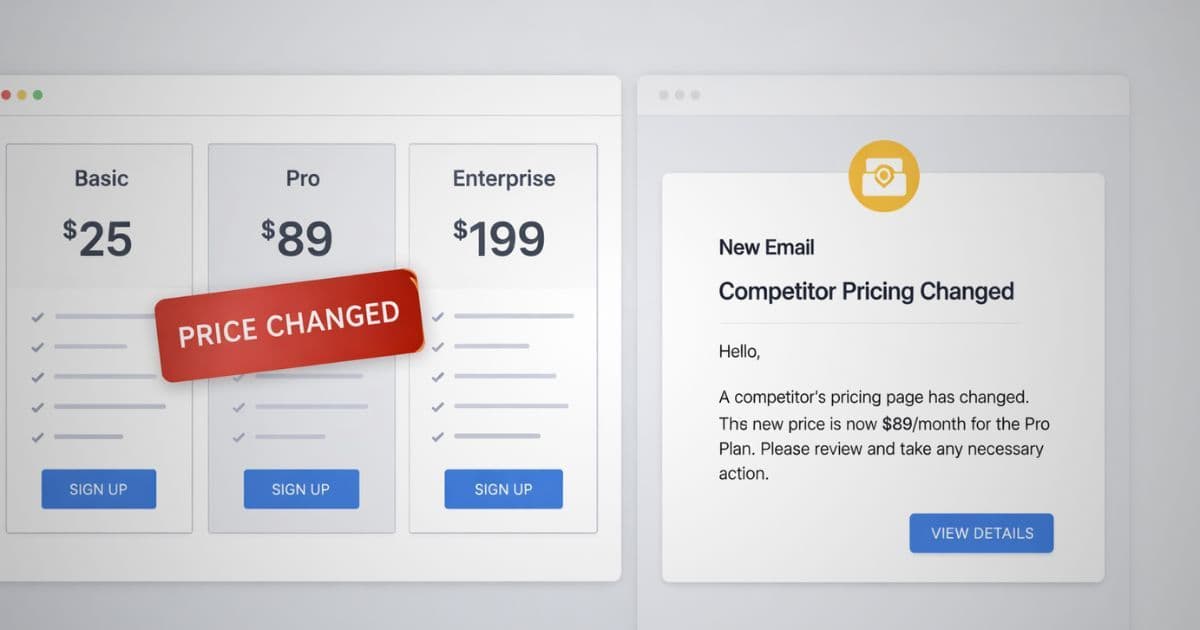
The answer is continuous monitoring with alert-based notifications. Pagezii watches competitor pricing pages around the clock. When a page changes, you get an email with a summary of what changed and when. You do not need to check. You get told.
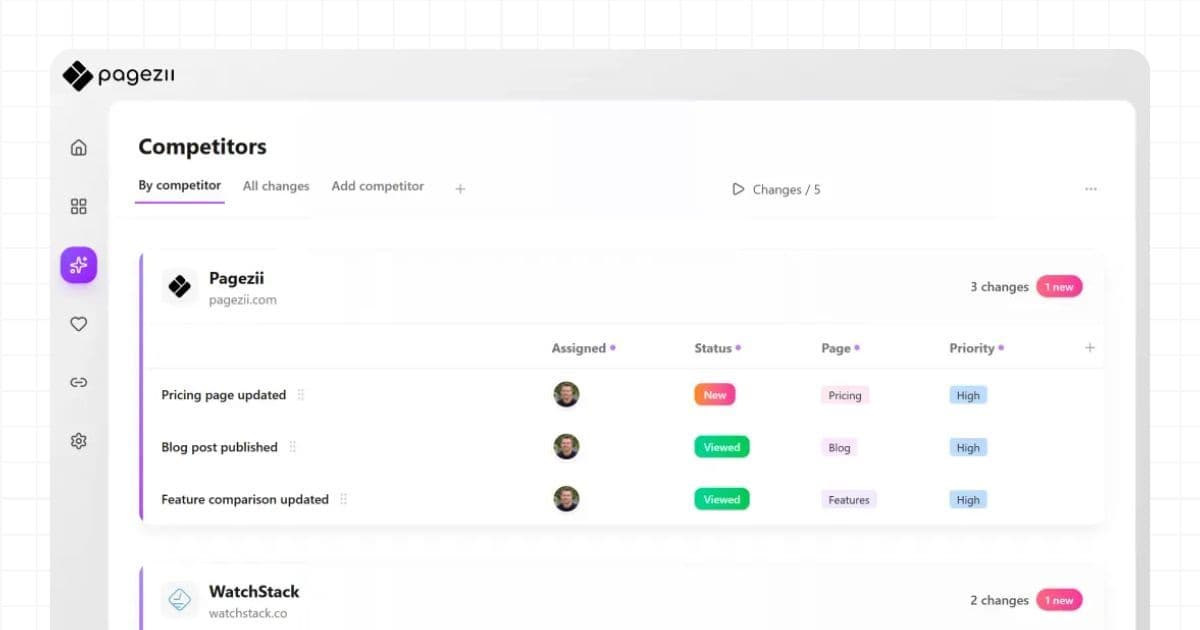
Pagezii also builds a change history so you can see not just what changed today but what has changed over the past 14, 30, or 90 days. That history is useful for spotting patterns: a competitor who has changed their pricing three times in six months is likely still finding product-market fit.
Beyond Pricing: What Else to Watch
Pricing changes rarely happen in isolation. A competitor repricing often comes alongside a features page update, a repositioned homepage, or a new blog post explaining the change to their audience. Tracking the pricing page alone misses the fuller signal.
Pagezii monitors pricing, features, homepage, blog, and product pages together. When multiple pages change in the same week, the weekly summary surfaces that pattern so you can connect the dots.
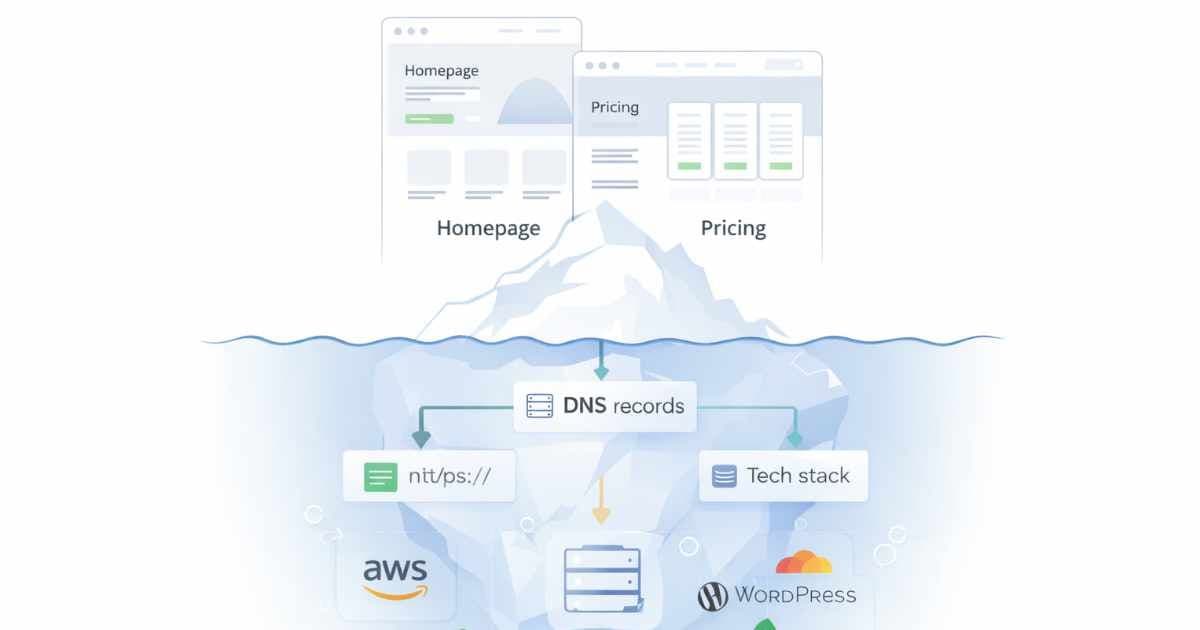
For a look at how technical changes like DNS and tech stack updates add another layer of early signals, read competitor DNS and tech stack signals.
What to Do When You Get a Competitor Pricing Alert
Getting the alert is the first step. Acting on it is the second. Here is a simple process:
First, look at the change in context. Did the price go up or down? Was a tier added, removed, or restructured? What does the new pricing say about who they are targeting?
Second, brief your sales team the same day. A short Slack message with the key change is enough. They need to know before their next demo, not after.
Third, decide whether your own pricing needs to respond. Not every competitor pricing move requires a reaction. Some do. Having the signal early gives you time to make that decision deliberately rather than reactively.
Set up competitor pricing change alerts once and let Pagezii surface every move the same day it happens.
About the Author

Anika Patel
Customer Support
Anika Patel
Customer Support
Anika helps Pagezii users with quick support, resolving issues and guiding users through the platform’s features and tools.
Frequently Asked Questions
More often than most teams expect. Early-stage SaaS products reprice frequently as they find their market. Established products adjust pricing in response to competitive pressure. Monthly or quarterly competitor pricing changes are common for companies that are actively growing.
Audience Context
For B2B SaaS founders and sales leads who lose deals when competitors reprice without warning. They care because pricing surprises in demos cost revenue.
Related Insights
- Manual Competitor Tracking Mistakes to Avoid — What slips through when you track manually
- Competitor DNS and Tech Stack Signals Explained — Signals that surface before pricing pages do
- Pagezii vs Crayon: Which Tool Fits Your Stage — Compare monitoring tools by budget and stage
- Is Pagezii Right for You? Fit Guide by Stage — Honest breakdown by company type
- 30 Days of Automated Competitor Tracking — From first alert to full team workflow
References
- Zhang, C., Otto, A., & Schneider, M. (2022). Competitive pricing on online markets: A literature review. Journal of Revenue and Pricing Management. https://pmc.ncbi.nlm.nih.gov/articles/PMC9194889/
- Ofek, E. (2024, January 16). Psychological pricing tactics to fight the inflation blues. Harvard Business Review. https://www.library.hbs.edu/working-knowledge/psychological-pricing-tactics-to-fight-the-inflation-blues
- A Step-by-Step Guide to Real-Time Pricing. (2023, October 31). Harvard Business Review. https://hbr.org/2023/11/a-step-by-step-guide-to-real-time-pricing
- Competition Bureau Canada. (2025, December 17). Ordinary selling price. Government of Canada. https://competition-bureau.canada.ca/en/deceptive-marketing-practices/types-deceptive-marketing-practices/ordinary-selling-price
- McKinsey & Company. (2025). B2C pricing insights: Growth, marketing & sales. https://www.mckinsey.com/capabilities/growth-marketing-and-sales/solutions/periscope/solutions/b2c-pricing-solutions/b2c-pricing
Disclaimer
This article is provided for informational purposes only. Pagezii aims to share practical insights on competitor tracking and market intelligence but does not guarantee completeness, accuracy, or specific business outcomes.