

Where to Hire Remote Workers for Your Startup: 40+ Platforms by Role
Synopsis
A long-form linkable asset listing 40+ platforms to hire remote workers for startups, organized by function. Covers developers and engineers, designers and product, sales and SDRs, marketing and growth, operations and finance, and customer support.
Why Remote Hiring Is Now the Default for Startups
Five years ago, remote hiring for startups was an exception. You hired remotely when you could not find the right person locally or when a candidate was too strong to pass up. Today it is the default.
The shift is structural. The talent pool for technical and specialized roles is genuinely global. A senior backend engineer in Warsaw, a growth marketer in Buenos Aires, and a customer success lead in Cape Town are all a video call away. The tools to manage distributed teams — async communication, time-zone-aware scheduling, remote-native project management — are mature and cheap. And the best candidates increasingly expect the option.
For early-stage startups specifically, remote hiring has one additional advantage: cost structure. Hiring a skilled developer in Eastern Europe or Latin America at market rate for those regions costs significantly less than hiring the same skill level in San Francisco or London. That gap does not mean lower quality. It means your runway goes further.
Key Insight: Startups that hire remote workers across time zones often get more coverage and faster response times than fully co-located teams — if they build the right async culture.
But the platform landscape for remote hiring is fragmented. There are generalist freelance marketplaces, specialist technical hiring platforms, curated talent networks, remote-first job boards, and offshore staffing agencies — and the right one depends heavily on the role you are filling, the engagement type (full-time vs contract vs project), and the skill level you need.
This post maps out 40+ platforms organized by function so you can identify the right starting point for each hire.
The cheapest platforms are not always the fastest path to a good hire. Curated networks cost more but reduce time-to-quality significantly. For roles that directly affect your product or revenue, pay for curation. For commodity tasks, price-shop.
Before You Start: What Type of Hire Do You Actually Need?
Before you open any of these platforms, spend 20 minutes answering three questions.
Full-time employee vs contractor? Employment laws vary significantly by country. In many markets, misclassifying a full-time worker as a contractor creates legal exposure. If you want ongoing, dedicated work, use an EOR (Employer of Record) service like Deel or Remote to hire compliantly. If you need project work, a freelance platform is fine.
Generalist vs specialist? The best freelance platforms for generalists are different from the best platforms for specialists. A generalist developer who can do full-stack work is found on Upwork or Toptal. A specialist in, say, Rust-based systems programming needs a more targeted approach.
Async vs real-time? If your work requires real-time collaboration, time zone overlap matters. If your work is primarily async, you have more geographic flexibility. Be honest about this before you post a role.
Write the job description before you pick the platform. Knowing exactly what you need — role, skills, engagement type, time zone requirements — makes it much easier to choose the right marketplace and attract the right candidates.
Developers and Engineers
Generalist Development Platforms
Upwork — The largest global freelance marketplace. Good for: full-stack development, web development, mobile, and API integration. Best for project-based or part-time engagements. Quality varies enormously — use test projects, check portfolio work, and look for verified earnings over time. Hourly rates: $30–150/hr depending on region and specialization.
Toptal — Claims the top 3% of applicants. Rigorous screening process. Good for: senior developers who need to start fast and work independently. Higher cost than Upwork but dramatically lower time-to-quality for experienced hires. Hourly rates: $100–200/hr. Best for: temporary senior hires, technical leadership gaps.
Gun.io — Focused on US-based vetted engineers. Good for: founders who need a senior developer and want to avoid the screening burden entirely. Faster to productive work than most general platforms.
Lemon.io — Focused on Eastern European developers. Good for: cost-effective senior development at lower rates than US market. Strong for Node.js, React, Python, and mobile.
Arc.dev — Remote developer hiring platform with pre-screening. Good for: full-time or long-term contract developers. Covers a wide range of stacks. Has a job board component alongside the talent marketplace.
Turing — AI-vetted remote developer platform. Good for: full-time remote engineering roles where you want Silicon Valley-quality talent at global rates. Time zone emphasis on Latin America and South/Southeast Asia.
Specialist Development Platforms
Braintrust — Decentralized talent network. Good for: senior developers, product managers, designers. Founder-friendly fee structure — talent keeps more of what they earn, which means better quality for lower total cost.
Hired — Salary-first platform where candidates specify their expectations and companies reach out. Good for: senior or lead engineering hires at full-time. Best for US and Western European markets.
AngelList Talent (now Wellfound) — Job board and talent network specifically for startups. Good for: engineers and product people who want to work at early-stage companies. Strong startup signal — candidates applying here self-select for equity and scrappiness.
Pangea — Focused on college students and recent graduates looking for startup contract work. Good for: lower-cost development support, specific project tasks, or finding early-career talent willing to work for equity and learning.
Codementor — Platform for on-demand technical mentorship and project-based development. Good for: founders who need a senior developer to review architecture, fix specific bugs, or consult on technical decisions without committing to a full hire.
CloudDevs — Focuses on Latin American developers in US time zones. Good for: startups that need time zone overlap with US business hours at rates 30–50% below US market. Strong for React, Python, and Django stacks.
Designers and Product
99designs — Crowdsourced design platform. Good for: logo design, brand identity, marketing assets. Works on a contest model — you post a brief, designers submit concepts, you pick a winner. Less appropriate for ongoing product design work.
Dribbble — Portfolio platform with a hiring component. Good for: finding specific designers whose aesthetic matches your product vision. Candidates here are self-selected for quality and visual creativity.
Behance — Adobe's portfolio platform. Similar to Dribbble. Good for: sourcing designers for UI/UX, illustration, and motion work. Less of a direct hiring marketplace, more of a sourcing database.
Contra — Freelancer platform with a strong design and creative community. Good for: product designers, brand designers, and UX researchers on a project or retainer basis. No platform fees to freelancers, which improves quality-per-dollar.
Toptal Design — Toptal's design vertical. Same rigorous vetting process as their developer network. Good for: senior product designers who need to be productive immediately. Higher cost, lower screening burden.
DesignPickle — Subscription-based unlimited design service. Good for: high-volume marketing asset production. One flat monthly fee for unlimited requests. Not for product design or complex UX work — best for social media assets, ads, and simple landing page graphics.
Superside — Agency-style creative subscription. Good for: startups with ongoing creative needs: pitch decks, ads, landing pages, brand refresh. More expensive than DesignPickle but better quality and more creative capability.
Sales and SDRs
Closer — Specialized platform for remote sales talent. Good for: founding AEs, SDRs, and closers for early-stage B2B startups. Candidates understand startup sales environments and equity compensation.
Sales Talent Agency — Toronto-based sales recruitment firm with remote and North American focus. Good for: full-time senior sales hires — VP Sales, Enterprise AE — where quality is critical and bad hires are expensive.
RepVue — Sales platform where reps rate companies on comp, culture, and quota attainability. Use it to benchmark compensation before you post a role, and to understand what reps look for in a startup.
Bravado — Community and hiring platform for B2B sales professionals. Good for: finding SDRs and AEs who are community-oriented and invested in the craft of B2B sales. Strong in the US market.
LinkedIn — Still the best platform for full-time sales hires globally. Premium recruiter features are expensive but worth it for senior hires. For SDRs, a well-crafted organic post often works better than a recruiter seat.
Remotify — Offshore sales and operations staffing with a focus on the Philippines. Good for: SDR roles, lead research, and CRM data management at lower cost.
Marketing and Growth
Mayple — Curated freelance marketing platform. Good for: paid acquisition specialists, SEO consultants, and email marketing. Vets candidates against campaign performance data, not just portfolios. Better quality signal than generic platforms.
GrowthCollective — Curated network of growth marketers. Good for: demand generation, performance marketing, and SEO for early-stage startups. Founders submit a brief and get matched to vetted marketers.
Demand Curve — Growth agency and education platform. Offers fractional growth marketing services alongside their training programs. Good for: early-stage startups that need a structured growth framework alongside execution.
Worksome — European freelance marketplace with marketing and growth talent. Good for: UK and European-based growth, content, and performance marketing contractors.
Content Cucumber — Subscription content writing service. Good for: regular blog and article production at scale. Writers are vetted but generalist — good for volume, less appropriate for highly technical or niche content.
Verblio — Content marketplace with a focus on SEO content. Good for: startups that need consistent SEO-focused content output. Writers specialize by industry vertical. Better quality signal than generic writing platforms.
Operations and Finance
Belay — Virtual assistant and bookkeeping platform. Good for: founders who need executive assistant support, calendar management, inbox management, or basic bookkeeping. US-based VAs, premium quality.
Time etc — Virtual assistant platform. Good for: ongoing operational support — scheduling, research, admin tasks. UK and US-based. Lower cost than Belay with slightly less vetting rigor.
Boldly — Premium virtual assistant subscription. Good for: founders who need a consistent, senior-level VA rather than task-by-task support. Higher cost, higher quality, consistent relationship.
Pilot — Accounting and bookkeeping software plus human accountant layer. Good for: startups that need clean books without hiring a full-time accountant. Automates reconciliation, handles payroll reporting, and produces monthly financial statements.
Bench — Similar to Pilot. Bookkeeping-as-a-service for small businesses and startups. Good for: founders who need simple, accurate books without complexity. Less appropriate for companies with complex revenue recognition.
Deel — Employer of Record and contractor payment platform. Good for: paying remote contractors and full-time employees in multiple countries compliantly. Handles contracts, local compliance, and currency conversion. Essential for startups hiring across borders.
Remote — Similar to Deel. EOR platform for global full-time hires. Good for: startups that want to hire full-time employees in markets where they do not have a legal entity.
Customer Support
Influx — Managed customer support as a service. Good for: startups that need 24/7 support coverage without building an in-house team. Scales up and down with ticket volume. Covers email, chat, and social.
Support Ninja — Offshore support staffing with Philippines and Eastern European agents. Good for: cost-effective support staffing with reasonable quality controls. Works best with strong internal knowledge base documentation.
Boldr — Ethical outsourcing firm with a focus on social impact hiring. Good for: startups that want quality support staffing with a transparent supply chain. Agents in the Philippines and South Africa.
Reamaze — Not a hiring platform but worth mentioning: a customer messaging platform that integrates with Shopify and other tools. Useful infrastructure for remote support teams regardless of where you hire.
Global Talent Platforms (Cross-Functional)
Remote.com Job Board — Job board component of Remote's EOR platform. Good for: posting roles and reaching candidates who specifically want full-time remote positions with compliant employment.
We Work Remotely — One of the oldest and highest-traffic remote job boards. Good for: engineering, design, and product roles. Strong developer audience. Simple flat-fee posting model.
Remote OK — Aggregator job board with high organic traffic. Good for: broad reach across technical and non-technical roles. Works alongside automated distribution to similar boards.
Himalayas — Remote job board with clean UX and a curated company directory. Good for: attracting candidates who want detailed company information before applying.
Remotive — Community-driven remote job board with a newsletter. Good for: reaching candidates who are actively looking for remote roles and follow the remote work community.
Flexjobs — Premium subscription job board for remote and flexible roles. Good for: reaching candidates who are serious about remote work — they pay to access the board, which increases intent signal.
The Signal Your Competitors Are Sending When They Hire
Here is the piece most startup founders miss entirely.
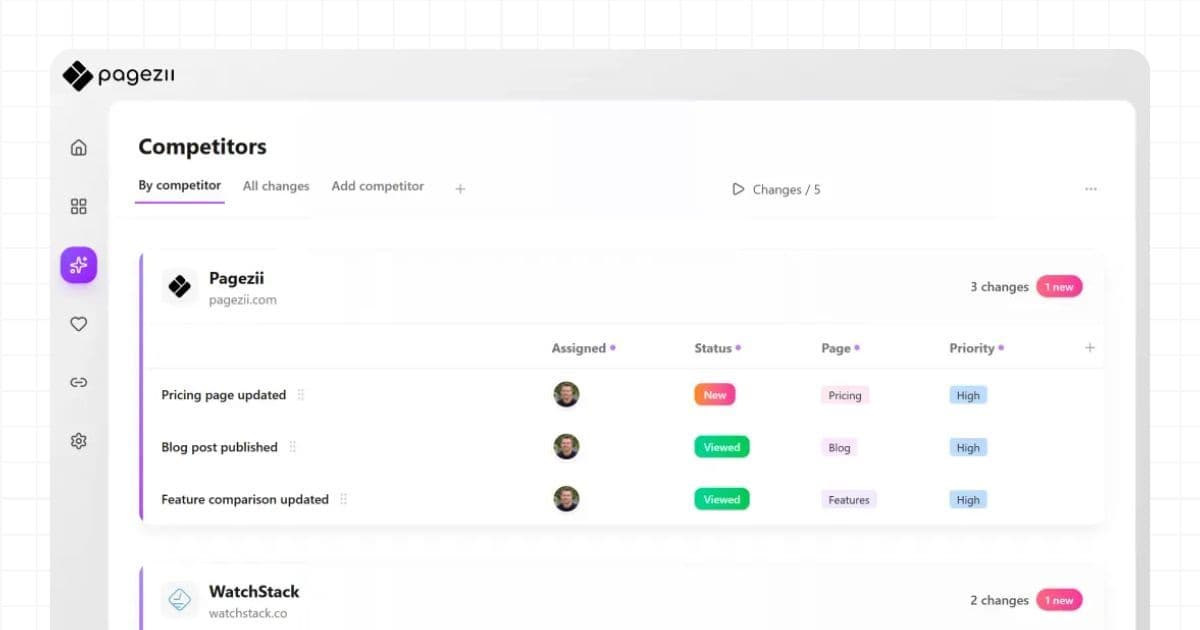
When a competitor adds a jobs page subdomain — jobs.competitor.com — Pagezii's DNS monitoring catches it. When they start posting roles for a Head of Enterprise Sales or a Senior Machine Learning Engineer, that is a six-to-twelve-week preview of where they are investing next. When they suddenly hire three SDRs and a Sales Ops Manager, they are building a sales motion. When they hire two ML engineers, they are building a product feature that will be announced in a quarter.
Competitor hiring patterns are some of the most reliable early signals in competitive intelligence — and most teams never look at them.
When you see a competitor post a role for a function they have never staffed before, add it to your competitive notes. It is not always meaningful, but it is almost always directional. A first ML hire means something different than a fifth ML hire.
Pagezii monitors DNS and tech stack changes that surface when competitors spin up new infrastructure — including job board subdomains, new ATS tools, and HR software additions. Pair that with your own monitoring of their LinkedIn company page and you have a reasonably complete picture of where they are building next.
What this means for your hiring: knowing what your competitors are hiring for helps you prioritize your own hiring plan. If your top two competitors are both building enterprise sales teams and you are still PLG-only, that is a strategic data point. If neither of them has a content marketing hire and you are building one, that is a potential edge.
Your competitors' hiring patterns are public intelligence. Most founders ignore it. The ones who do not have a meaningful advantage in both competitive positioning and resource allocation.
Track competitor LinkedIn company pages alongside Pagezii's DNS monitoring. LinkedIn shows headcount growth over time and new role categories. DNS shows new subdomains and infrastructure. Together they tell you more than either does alone.
Hiring Platform Summary by Role
To make this easier to reference, here is the quick-reference breakdown:
- Developers: Upwork (generalist, volume), Toptal (senior, urgent), Lemon.io (Eastern Europe), CloudDevs (Latin America, US time zones), Arc.dev (full-time remote), Turing (full-time, AI-vetted)
- Designers: Dribbble (sourcing), Contra (freelance), Toptal Design (senior, urgent), Superside (ongoing creative volume)
- Sales: Bravado (SDRs), Sales Talent Agency (senior AE/VP), Closer (founding sales), LinkedIn (all levels)
- Marketing: Mayple (paid, SEO), GrowthCollective (fractional growth), Verblio (SEO content), Content Cucumber (volume content)
- Operations: Belay (executive VA), Pilot (bookkeeping), Deel or Remote (EOR and global contractor payments)
- Customer Support: Influx (managed), Support Ninja (offshore staffing), Boldr (ethical offshore)
About the Author

Jenna Gallo
Business Development
Jenna Gallo
Business Development
Jenna supports Pagezii’s business development, partnering with founders and teams while sharing insights on competitive intelligence and strategy.
Frequently Asked Questions
It depends on urgency and seniority. For senior developers who need to start fast, Toptal or Gun.io reduces screening time significantly. For cost-effective senior talent in Latin America or Eastern Europe, CloudDevs or Lemon.io are strong options. For maximum flexibility and range, Upwork works but requires more upfront vetting effort.
Audience Context
For early-stage startup founders actively building their first remote team. They care because platform choice affects time-to-hire, quality, and burn rate — and competitor hiring patterns are intelligence they are currently ignoring.
Related Insights
- Competitor DNS and Tech Stack Signals Explained — How competitor hiring signals surface in DNS changes
- 30 Days of Automated Competitor Tracking Results — Build a monitoring system that catches hiring signals
- Angel Investors for B2B SaaS Startups by Region — Once you have hired, know who to raise from next
- Competitor Monitoring for Product Roadmap Protection — What competitor hiring tells you about their product direction
- Is Pagezii Right for You? Honest Fit Guide by Stage — Understand your stage before scaling your team
References
- Job search strategies that are working now. (2026). Yotru. https://yotru.com/blog/job-search-strategies-that-are-working-now
- McKinsey & Company. (2020, November 22). The future of remote work: An analysis of 2,000 tasks, 800 jobs, and nine countries.
https://www.mckinsey.com/featured-insights/future-of-work/whats-next-for-remote-work-an-analysis-of-2000-tasks-800-jobs-and-nine-countries - World Economic Forum. (2025, January 7). Future of Jobs Report 2025: The jobs of the future – and the skills you need to get them.
https://www.weforum.org/stories/2025/01/future-of-jobs-report-2025-jobs-of-the-future-and-the-skills-you-need-to-get-them/ - Marco Polo. (2025, April 11). By the numbers: Remote work statistics and trends.
https://www.marcopolo.me/business/resources/remote-work/by-the-numbers-remote-work-statistics-and-trends - Harvard Division of Continuing Education. (2020, August 30). How to better manage your remote team.
https://professional.dce.harvard.edu/blog/how-to-better-manage-your-remote-team/ - Hubstaff. (2024, March 3). Hire remote workers in 2025: Guide & remote employee agreement.
https://hubstaff.com/blog/hire-remote-workers-guide/
Disclaimer
This article is provided for informational purposes only. Pagezii aims to share practical insights on competitor tracking and market intelligence but does not guarantee completeness, accuracy, or specific business outcomes.